
What does 50 Cent’s ‘Sean Combs: The Reckoning’ reveal about abuse of power at work?
By Leyya Sattar
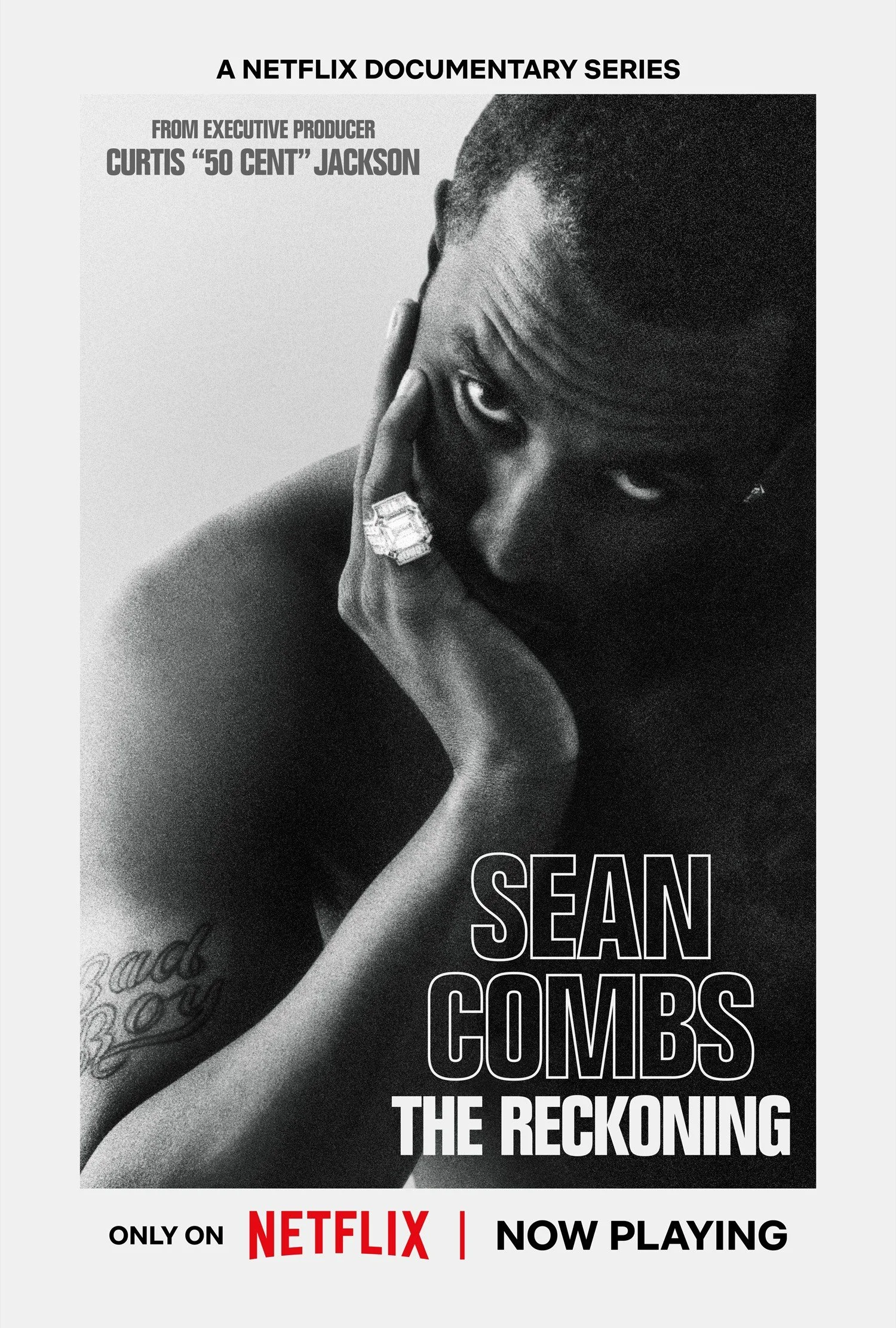
I watched Netflix's ‘Sean Combs: The Reckoning’. Not because I needed more proof that powerful men abuse their power, we know that. I watched because I wanted to see how a documentary produced by Diddy’s biggest troll would frame “justice” and what that would reveal about our own appetite for such a spectacle.
Since it dropped, plenty of journalists, insiders and viewers have disputed parts of the series on what’s true, what’s missing, etc. I’m not here to fact-check every claim, as I'm not an investigative reporter, I’m writing as someone who’s spent the best part of a decade working with leaders and organisations on improving workplace culture. Through that lens, what stood out to me wasn’t just the abuse of power in his personal life, but how familiar that abuse looks in the context of work. That’s what I want to talk about.
Marketing vs. Business
The first thing that hit me was how easily we are manipulated by good marketing. We confuse hype for substance, charisma for character, and cling to those age-old binaries of good guy or bad guy, victim or villain, us or them, East Coast or West Coast. Our nervous systems crave certainty and belonging. It feels easier to decide who is “good” and who is “bad”, who is “ours” and who is “other”, than to sit with the fact that people can be both, or that we do not have to pick a side at all.
In our DEI training at Other Box, there are a few biases that come to mind:
The Halo Effect: When someone is branded a genius or a mogul, we assume success in one area (record hits, money, lifestyle) equals integrity everywhere else. We project competence and morality onto everything they touch, even when the receipts say otherwise.
In-group bias: We side with “our” team or culture over the truth. For many, seeing a Black man reach that level of power felt inspiring and overdue, and so that pride can make it harder to look objectively at how that power and money were being abused.
Familiarity bias: The more omnipresent a brand or face is, the safer it feels, even when there are clear signs of mistreatment, abuse and violence.
This documentary, like thousands of other examples, shows that being good at marketing doesn’t make you good at business, leadership, or being a decent human being. The Bad Boy label grew into a massive empire while many of the artists and employees who built it remained broke. As one artist says in the documentary: “He could make us famous, just not rich.” Over and over, people described not being paid properly despite being integral to the work, being pushed out of deals, frozen out of opportunities and blacklisted from the industry.
And this isn't unique to the music industry. It's the same playbook in celebrity- and influencer-led brand launches, tech companies, and fashion businesses that prioritise style over substance and "being disruptors," yet are still built on exploitative labour practices. It is the founder who can pitch a vision so well that you feel lucky to be there, then scapegoats and steps over people to protect their own interests. It's the difference between businesses that chase "growth at all costs" and those that try to build something sustainable, ethical and dignified.
And we keep that machine running. The people and companies we give our money to, the ones we follow on social media, and the ones we stream and stan are all part of the model. When we look away from exploitation because we like the brand, the music or the memes, we become accomplices in the abuse of power.
The takeaway here isn't just "read your contracts" or "avoid shiny things", which could be a brand, a person or a seemingly exciting opportunity; it's before you give a person or brand your time or money, ask three questions:
Who owns what?
Who gets paid what?
And what happens to people who speak up?
If you don't like the answers, no amount of hype is worth the cost. Empower yourself with awareness to make informed, ethical choices.
Textbook Narcissistic Abuse
And underneath the contracts, clever marketing and branding, there is something even darker driving it all: textbook narcissistic abuse. If you've listened to my podcast Narcissism at Work with clinical psychologist Dr Daksha Hirani, who specialises in narcissistic abuse recovery, you'll recognise every pattern we discussed in this documentary. Every single one. It is always about power and control.
→ Diddy was surrounded by enablers
You see the full cycle: intense love-bombing, then slow devaluation. Gaslighting and rewriting history so victims doubt their own memories. Isolation from friends, family and colleagues, so there's no one around to give you a reality check. If you speak up, you're accused of 'causing drama,' and then you're punished financially, professionally, and socially. The system protects the abuser because, in many ways, the abuser is the system: the money, the connections, the opportunities, the rooms everyone wants to be in.
Diddy was surrounded by enablers. Another thing we see again and again with leaders who show narcissistic traits, especially when there's unlimited money, cultural influence and industry protection. People will excuse almost anything if proximity to that person still offers them access, status or career leverage. Being labelled a "toxic workplace" or "difficult genius" doesn't stop the pipeline of people lining up to work with you; for some, it even adds to the allure. We literally see this in the documentary, where people overlook what they know or what they've heard because they want Diddy's co-sign, invites to the parties, and access to his platform.
A scarcity mindset is a key part of the control. You see it in poor contracts, surveillance, delayed or missing payments, and that "golden carrot" we talk about on the podcast, where the promise of a big break, a major deal, a life-changing opportunity that's always just around the corner if you stay loyal and keep quiet. When someone controls your income, your access and your reputation in the industry, they don't need to shout to keep you in line, because your fear of losing everything does the work for them.
In other workplaces, it can look like:
A leader who alternates between praise and humiliation, so you are constantly off balance.
Promotions, pay rises or permanent contracts dangled but never quite materialising.
HR and senior teams closing ranks around the leader, no matter how many complaints come in.
Phones, emails or Slack messages “checked” under the guise of work.
A whisper network warning you that “this place is toxic” while also telling you the brand name will “open doors” later, so you endure it.
In one clip, you see this mindset clearly. Diddy is sitting with his lawyer, not discussing accountability or repair, but planning how to control the narrative around the court case: how the story will look, what people will see, how to sway the publics perception of him. If you control the people, you control the story. Strip away the celebrity, and you see the same pattern in so many workplaces: someone at the top using money, access, and fear to keep everyone else compliant.
It Takes a Village to Protect a Predator
The documentary also showed that abuse of this scale doesn’t ever happen in isolation and requires institutional scaffolding. Record labels knew and looked the other way because the money was too good to pass up. Media outlets platformed him for decades, running glossy profiles even as rumours about his violence and abuse circulated. Industry awards and honours kept piling up, despite what people knew behind the scenes. The professional services (lawyers, accountants, PR firms, crisis managers) enabled the abuse and actively helped conceal it, manage it, and spin it.
When we talk about ‘systemic abuse’, this is what we mean, institutions that choose profit and access over accountability, and gatekeepers who decide that someone’s “cultural impact” matters more than the people they have harmed. That is what makes it possible to get away with it, time and time again.
In the workplace, this looks like the HR departments that "investigate" but always find a way to protect the revenue-generator. Boards that renew contracts despite multiple complaints because "they're too valuable to lose." Investors who ignore red flags because the growth metrics look good. Industry conferences that keep giving the same people keynote stages while people who’ve suffered at their hands watch from the audience, or don't attend at all.
We love to frame these stories as one "bad apple", as if we were to remove them, the problem would be solved. But the documentary reveals the whole orchard is rotten to the core, and the culture, industry and institutions allowed it to thrive.
Proximity to Power
What we participate in reveals what we value. Or more accurately, it reveals what we've been conditioned to value. We buy from brands we know underpay their workers. We ignore supply chains built on exploitation. We "cancel" a brand for a season, then quietly return when the next drop hits. We follow strangers and celebrities whose entire job is to extract our attention, our money, and our sense of self. Why?
Because proximity to power, even imagined and digital, feels like status. Wearing certain brands, tagging certain venues, aligning ourselves to certain people signals 'I'm close to this’, or ‘I'm part of this world’. It lets us borrow a bit of their shine for our own identity and self-worth, even when it's all totally made up!
Proximity to power is not the prize we think it is, it is a business model. Whether that is a celebrity, a follower count, a charismatic founder or the loudest person in the meeting room, being close to them does not mean you share their power. Most of the time, you are paying for the privilege, with your money, labour or attention. That is how the system is designed: a capitalist hierarchy that concentrates power at the top and extracts value from everyone below. And while we are busy chasing the feeling of association, we are not asking the sharper question:
→ who taught me I was “less than” without this in the first place, and who profits when I believe it?
My Own Reckoning
Watching the people in the documentary weigh the cost of their truth, I saw a version of myself. That recognition is probably what sparked the anger behind this piece.
A few years ago, someone tried to intimidate me into silence by threatening me with legal action, coming at me with the shiniest, expensive legal team, which nearly cost me everything, except my integrity.
Years later, I am still sitting on mountains of evidence showing their incompetence, inaccuracies, and how they grifted their way from job to job, from others who also had the misfortune of working with them, too. In response, I poured my energy into a hit podcast series with a clinical psychologist, mapping the exact patterns now visible in Diddy's story and in countless founders' and leaders' stories that are brilliant at selling a narrative, ruthless in stepping over people, emotionally abusive, and masterful at exploitation disguised as opportunity. This is how it shows up in the modern workplace, just packaged as 'success', 'innovation' and 'great leadership'.
As we saw in the documentary, abusive people in power will riddle you with heavy legal documents, with ridiculous terms, silence you with NDAs (we did a whole episode on this), ridiculous timelines, and intimidation tactics designed to make you fold.
The world is run by bullies, bankrolled by other bullies, and protected by systems designed to keep bullies safe. This is what I mean when I talk about systemic oppression in my DEI training work at Other Box. Not abstract theory, but the architecture of abuse built into how we organise work, money, fame and proximity to power.
You might not have a headline case in your life, but the same question applies: whose power have you trusted more than your own instincts? Or, who have you put on a pedestal while shrinking yourself? And more importantly: what would it cost you to leave?
Why "Just Leave" Isn't that Simple
People often ask: "Why didn't they just leave?" As if walking away from abuse is as easy as closing a door. But when someone controls your reputation, your references, and your industry connections, leaving on bad terms could potentially lead you to be exiled from an industry which is often built on not what you know but who you know. In the documentary, people described being blacklisted, having their names dragged through the mud, and being shut out of opportunities for years after speaking up or trying to leave.
This is economic coercion as a weapon. When someone controls your rent money, your visa status, your kids' school fees, your healthcare, your access to future work, it isn’t as simple as ‘just speak up’ or ‘leave’. It assumes you have:
Savings to live on while you rebuild
Another job lined up
A network outside this person's influence (which can be hard if they control the industry)
No dependents relying on your income
Legal resources if they come after you
The emotional capacity to fight while also trying to survive
Most people don't have all of that. Many don't have any of it. So who can afford to walk away from a toxic situation and land softly? Who can afford lawyers when threatened? Who has a trust fund, a partner's income, family wealth, or a Plan B that doesn't involve eating through their last £500? The people with the least power are the most trapped. The single parent. The visa holder. The person with massive debt. Abusive leaders are skilled at seeking out vulnerable people, as it ensures power and control.
This is what I mean by systemic oppression. It's not just interpersonal abuse. It's how capitalism structures precarity to make abuse possible, profitable, and incredibly difficult to escape. The system needs people desperate enough to endure mistreatment.
What Dignity Requires
If we're willing to really look, here's what the documentary exposes about our complicity, when we:
Prioritise charisma over character: We let charming, confident people get away with behaviour we'd never tolerate usually.
Confuse wealth with wisdom: Money doesn't mean someone is smart, ethical, or worthy of your trust.
Mistake visibility for integrity: A big platform doesn't equal a good person.
Consume someone's story without considering the labour (and harm) that produced it: Every documentary, every album, every brand you love: ask yourself who paid the real cost for that to exist.
Stay silent: because speaking up would cost us access, our job, comfort, or an opportunity.
Dignity requires us to:
Examine our own proximity to power and what it costs others: Who are you aligned with? Whose validation are you seeking? What are you willing to overlook to stay close to that power?
Stop treating abuse as one "bad apple" and start seeing it as systemic design: It's about systems that reward exploitation, protect abusers, and allow them to avoid accountability.
Divest from the theatrics, the performances, brands and personalities built on exploitation: Stop giving your attention, your money, your energy to people and organisations that harm others. Your consumption has power. Use it.
Build different structures, not just better optics and PR: We don't need more "awareness campaigns" or "commitments to change" statements. We need contracts that protect workers. Pay transparency. Accessible complaint mechanisms.
This isn't unique to Diddy. The Bad Boy model is the model everywhere: extract value, hoard power, silence dissent, rebrand when necessary, repeat. Dignity means refusing to call that normal and choosing not to keep feeding it with our money, attention and labour.
The businesses that survive without stepping on people do exist, they're just quieter, slower, less 'disruptive.' They pay people properly. They have boring but fair contracts. They don't promise fame. And they rarely make documentaries.
The golden thread
When I talk about DEI, systemic oppression, narcissism at work, anti-productivity, money, and mental health, I am circling the same problem: most of us are still living by scripts we did not write.
Scripts like:
Proximity to power equals safety
Your worth is your output
Silence is professionalism
Wealth equals worthiness
These are inherited scripts. Colonial, capitalist, patriarchal. They decide who gets protected, who gets believed, and who gets thrown under the bus.
The Reckoning is not just about Diddy, and can be used like a mirror. Where do you see these scripts running your life, your work, your money, your silence? And what would it actually cost you to stop playing along?
What Now?
I don't have clean answers. I don't think anyone does. But I know liberation doesn't come from better PR. It doesn't come from replacing one powerful man with another. It doesn't come from "awareness" without action or hashtags without structural change.
It comes from deprogramming and unlearning the scripts that taught us power-over is the only model worth pursuing. From rooting into our dignity, our values, our nervous systems. From building structures where "make us famous, just not rich" isn't possible because exploitation isn't baked into the foundation.
It comes from each of us examining: Where am I complicit? Where am I silent? Where am I choosing proximity to power over my own integrity? Where am I participating in systems that harm people, including myself?
It comes from making different choices:
Not following shiny things just because everyone else is
Reading our contracts and taking our time
Having backup plans so we're not trapped
Believing survivors even when it's inconvenient
Building financial independence so we can afford to walk away
Choosing dignity over opportunity when the two conflict
That's the Reckoning we're not having yet. But we need to.
What did the documentary bring up for you?
